At my face to face consultations with the patients, only a few of them ask me how many grafts would be implanted and which technique would be used.
Generally, most of them ask the following question firstly.
“Will i have a natural hairline design?”
As a plastic surgeon, I feel very happy when i hear this question because it is the very basic and most important thing in all plastic surgeries including hair transplant in Turkey.
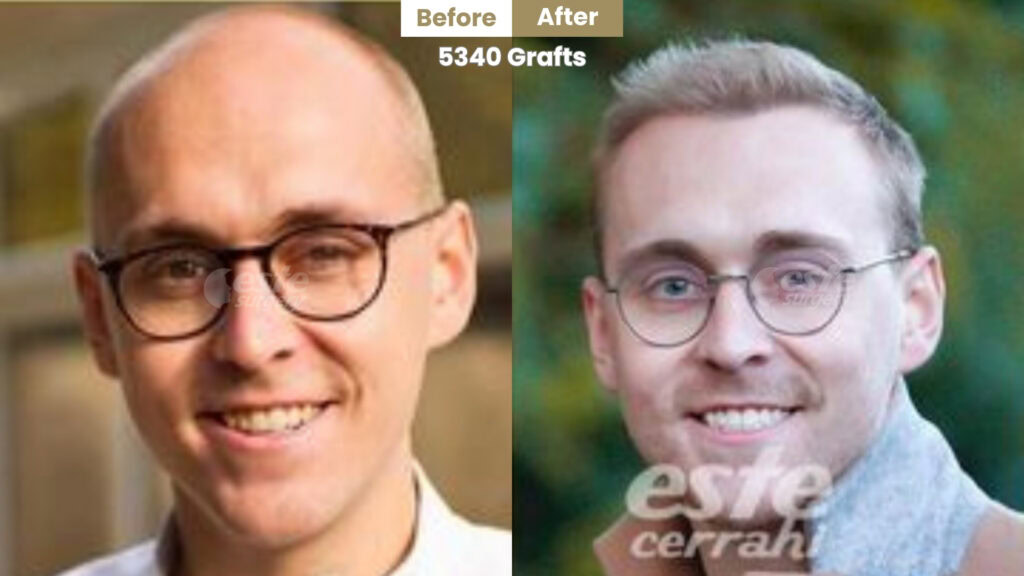
People can not notice a perfect hair transplant because it simply looks like natural hair. The most important point in hair transplant is the hairline. If the hairline is too low or too straight then it does not look like it belongs to that patient’s face. Even if all the implanted grafts survive, if the hairline is not well designed, then the result is unnatural and hair transplant is noticible.
That’s why, at Este Surgery, i personally design the hairline and plan the distribution of grafts for each area. This requires a serious educational background and expertise. In many cases, patients are surprised that we dedicate so much attention to a few lines drawn with a surgical marker. The reality is that those few lines will influence how the result looks for many years.
For me, a successful hair transplant isn’t about lowering the hairline or transplanting as many grafts as possible. It’s about finding the natural hairline design that fits the patient’s face and looks natural.
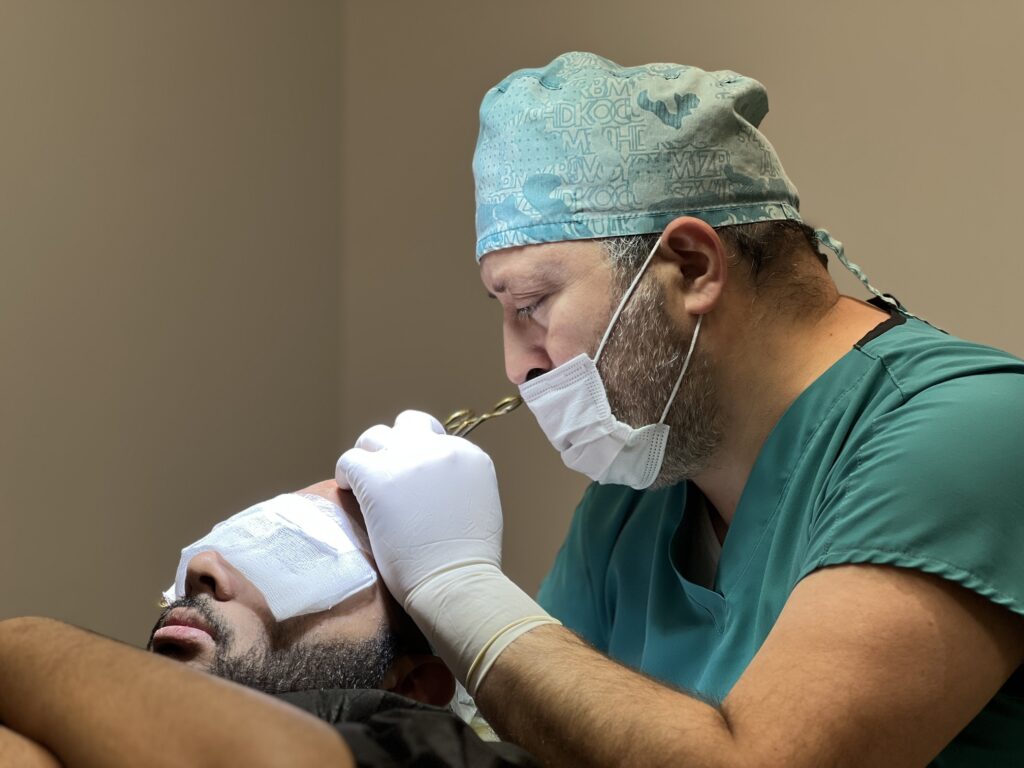
Why I Never Start a Hair Transplant Without Deciding the Natural Hairline Design First?
Over the last 20 years, I’ve seen that the most patients are just focusing on the numbers which is very wrong.
Their main concern is how many grafts they need, or whether 3000-4000 grafts would be enough. Some patients are also concerned about how the density will be after the hair transplant.
Those questions are also important questions, but they’re not the first questions I ask myself.
Before I think about graft numbers, I always think about where the new hair should begin.
We can think the hairline as the frame of the face. It’s the first thing people notice when they look at you, and it influences our overall appearance far more than most patients think. Generally if the outline looks natural, the entire transplant is expected to look natural. If the design is not good, it looks unnatural even all the implanted grafts survive.
For that reason, we never rush through the planning stage.
While making the hairline design before starting the slit stage, i always draw the hairline and show it to the patients. We discuss different options in front of a mirror and make small adjustments upon patients expectations. I always explain what i do and why i am doing so to the patients so that they understand the whole process and my approach better. Sometimes i even erase all the design and draw it again. This may seem like we are loosing time but i believe that this step is the most valuable part of the surgery since we decide the exact design which fits with patients expectations and medical anatomical requirements.
A Natural Hairline Should Belong to the Face—Not to Someone Else
Some patients come with photos of celebrities, models or their own photos taken 20 years ago. They say they want the same 🙂
I understand this. They are trying to explain what they hope to look like better.
However, i think that this is like asking me to make them someone else which is not true.
Copying another person’s hairline can never be the right solution in most cases.
Every face has its own proportions. The width of the forehead, the shape of the eyebrows, the position of the temples, the jawline, and even the way the face ages all influence where a natural hairline should sit.
A design that looks excellent on one person may look extremely unnatural on another.
Age also is another actor here.
Hairline design of a patient in his late twenties usually can not be same with another patient who is in his late forties. Many patients are surprised when I recommend a slightly more conservative design than they expected. After a few months, once the hair starts growing, they understand the reasoning behind my decision on the design.
My goal isn’t to create the youngest-looking hairline.
I always aim to create a natural hairline design which fits for now and even 10 years later.
Some patients think like they ended the hair loss by geting a hair transplant. NO! It is an ongoing process and they will keep losing hair in the future.
Hair transplantation isn’t just about replacing the hair you’ve already lost. It’s about making decisions that will continue to look balanced even your natural hair changes over time. Foreseeing the future hair loss and planning the hair transplant based on it, often prevents difficult corrections in the future.
As a 20 years experienced plastic surgeon, i never follow a standard template on especially hairline design. I always make my design special and unique for each patient.
What I Look for Before Deciding the Natural Hairline Design?
Patients often ask me how i decide the best looking and natural hairline design. They ask if make my design on measurements and calculations or artistic judgement.
Actually, it is both.
For a newly started plastic surgeon, following a formula for natural hairline may work in some conditions. However, after getting enough experience you see and understand that it is actually about combining anatomy, facial balance, and surgical planning.
Below are the principles that i pay my attention the most.
Hairline Height
Patients who had hair transplant before in somewhere else, sometimes have very low sit hairline. This is the most common mistake i see.
At first, lowering the hairline may seem like a good idea because it makes the forehead appear smaller. Patients also like it.
The problem is that natural hairlines mature with age.
A very low hairline on a mature face often attracts attention for the wrong reasons. You need more donor grafts than necessary for lowering the hairline as well. Honestly most patients keep experiencing hair loss and they need another hair transplant surgery in the future. Guess what we dont have for the future hair transplant. Yes, donor hair! Donor hair is like a treasure for us and we have to be very careful while spending it.
Whenever possible, I prefer to design a hairline that looks believable rather than aggressive.
When i draw the hairline and show it to the patients, they just say OK but i feel that they are not actually very happy. Because they always dream a lower hairline. After they see the final result they understand my concern and appreciate it one year later.
Perfectly Straight Hairlines Don’t Exist
Nature isn’t perfectly symmetrical.
If you look closely at someone who has never experienced hair loss, you’ll notice that their hairline isn’t a perfectly straight line across the forehead. There are tiny irregularities, subtle changes in density, and small differences between the left and right sides.
Those imperfections are exactly what make natural hair look real.
When i design a hairline, i always avoid creating it with sharp geometric lines. Instead, we prefer having subtle variations that soften the transition between the forehead and the hair.
Patients generally dont notice these details during surgery. They notice and understand it only after 6 months when the hair grows.
The Finest Grafts Always Go First
Another detail that has a surprisingly large impact on a natural hairline is graft selection.
I always use finer, single-hair follicular units in the first 5 millimetres of the hairline for a natural result. Behind that soft leading edge, density gradually increases by using grafts containing two or three hairs.
It sounds like it does not make a big difference, but it’s one of the key factors that makes the hairline look natural while others made without this approach appear harsh.
In hair restoration, very small and tiny details make a huge difference.
I Also Think About How Your Hair Will Look 10 Years After Hair Transplant
Some patients ask this:
“Doctor, is it possible to make my hairline just a little lower?”
I understand the request. Hair loss changes the way people see themselves. From a patients aspect, it is very natural to want his hairline he used to have in his early twenties.
But my responsibility isn’t to recreate the past. It’s to create a result that will continue to look natural in the future.
Hair loss doesn’t stop after a hair transplant. Because, hair transplant itself is not a preventing treatment. Even it looks stable for a while, there is always the possibility that existing hair will continue to thin and fall over time. If we ignore that possibility and focus only on today’s appearance, the result may look unbalanced in just a few years.
That’s why I always think beyond the day of surgery.
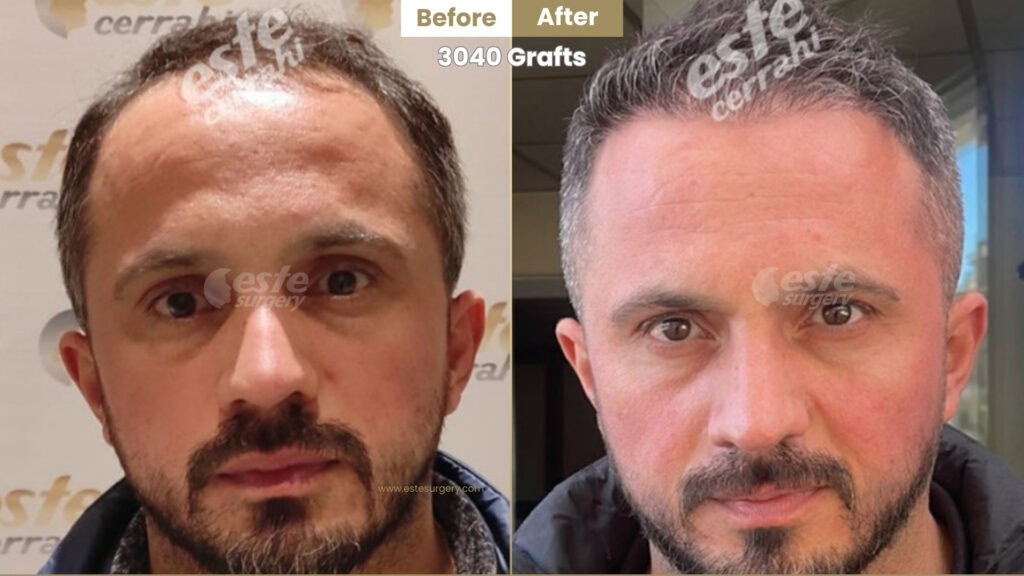
I’m thinking about how your face would look like after aging, how your hairstyle might change, and whether you would need another hair transplant in the future. Because we will need donor hair again in that case.
Patients sometimes assume this approach is overly cautious.
Personally, I call this as simply responsible planning.
A natural-looking hair transplant isn’t just one that looks good in a short term like after twelve months. It has to look believable and natural 10 years later as well.

How We Design Your Hairline at Este Surgery
Most people think that drawing a natural hairline design takes only a few minutes.
In reality, it’s one of the longest conversations we have before surgery.
We always begin by taking clinical photographs from different angles. These images allow us to evaluate facial proportions more objectively than looking in a mirror alone.
Then we sit down together.
I ask patients what they like about their original hairline, what concerns them most today, and what they hope to achieve after hair transplant. Some want to restore a youthful appearance. Others simply want to frame their face again without looking like they’ve had cosmetic treatment.
Those goals aren’t always the same, and the matter here is understanding the patient.
Once we’ve discussed expectations, I begin drawing the proposed hairline.
Very rarely we get it exactly right on the first attempt.
We make small changes.
We erase.
We redraw.
Sometimes moving one corner by only a few millimetres completely changes the balance of the face.
We move forward with the procedure only after both the patient and I feel comfortable with the design.
That’s because every graft we implant afterwards follows the blueprint we’ve decided together.
How We Are Different: Others vs Este Surgery
| Stage | Generic Clinics | Este Surgery |
|---|---|---|
| Consultation | Often non-medical sales staff | Physician-led, evidence-based planning |
| Method Recommendation | Limited to 1–2 options | FUE, Sapphire FUE, DHI, and SDHI available |
| Hairline Design | Template-based | Designed and Customized by plastic surgeon |
| Recovery Support | General handout | 1-on-1 follow-up, kits, ongoing guidance |
| Graft Tracking | Rarely done | Documented with clinic-reviewed milestones |

Why Two Patients Should Never Have the Same Hairline
Some patients may think we have a successfully created hairline design and we apply it to every patient 🙂
In reality, that’s impossible.
During the last 20 years I’ve performed more than 15.000 hair transplant procedures. I have seen very identical patterns of hair loss which ends up looking completely different from each other. We use a unique design and plan for each patient based on patients needs, facial lines, age even height. You can not just have a standard design and use it for any patient.
A natural hairline is never designed in isolation. It has to work with the forehead, the temples, the eyebrows, the shape of the face, and even the texture of the hair itself.
For example, someone with coarse, wavy hair can often achieve excellent visual density with a slightly more conservative design. A patient with very fine, straight hair may require a completely different strategy to create the same natural appearance.
Donor capacity also changes everything.
If a patient has a limited donor area or is likely to experience further hair loss in the future, I make my every single decision based on this reality. Designing an aggressive hairline may make the patient very happy today but he will have no more grafts for a second or even third session in the future.
Patients don’t always see those variables during the consultation.
As surgeons, we do. And we have to explain this to patients and make them understand exactly. This is the the very basic role and responsibility of a physician.
That’s why we never keep a “standard” hairline template at Este Surgery. Every patient starts with a blank page, and every design is created around the individual rather than the procedure itself.
The Difference Between a Good Hairline and a Great One
People often think the difference between hair transplant surgeries is the number of grafts or if you are using the best hair transplant technique.
However, a good result and an exceptional result is not about the graft quantity from a surgeon’s perspective.
The difference is actually found in details that most people even never notice.
Factors Leading a Natural Looking Hair Transplant Result:
- The first few hairs soften the transition between the forehead and the scalp.
- The angle of the each hair graft.
- The slight irregularity that prevents the hairline from looking drawn with a ruler but very natural.
- Adjustment of the density of each part of the head.
Each of these decisions may seem small and not important when you consider them on their own, but when you put them together they determine whether the final result simply looks like transplanted hair or whether it blends naturally with the patient’s appearance.
Ironically, the best hairline design is often the one nobody notices.
Friends or people you know may comment that you look younger, healthier, or more refreshed, without ever realising you’ve had a hair transplant.
For me as a plastic surgeon, that’s always the goal.
It is not about creating the perfect hairline. Or we have to define what perfect hairline is actually.
A natural-looking hair transplant begins in imagination of the surgeon long before the first graft is placed.
It begins with careful planning.
Every hairline i draw, every adjustment i make, and every decision i take is guided by a simple question:
Will this still look natural years from now?
That’s the only design standard i follow at Este Surgery.
My goal has never been to create identical hairlines or follow unrealistic trends. Instead, i design each hairline tailored to the individual, respecting facial anatomy, future hair loss, and the subtle details that make natural hair look effortless.
Because in the end, the most successful hair transplant isn’t the one that attracts attention.
It’s the one that simply looks like it has always belonged there.
FIND US on SOCIAL MEDIA